
 中文
中文
 Español
 Français
 Русский
 日本語
日本語
 한국어
한국어
 Tiếng Việt
 Bahasa Indonesia
 ภาษาไทย

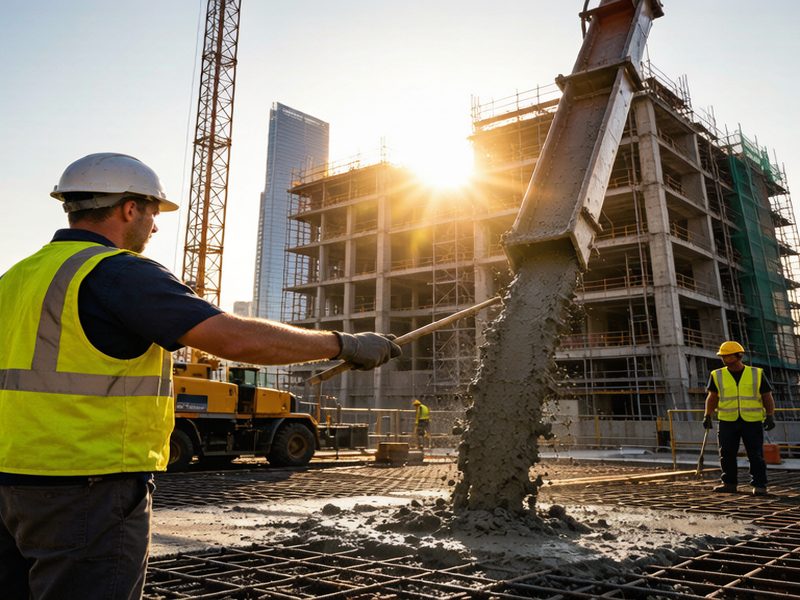
On construction sites, sodium silicate solves problems as varied as dusty concrete floors and unstable excavation soil. Here is how this old-school chemical stays relevant in modern building.
Concrete Densifier
When sprayed onto cured concrete, sodium silicate penetrates the surface and reacts with free calcium hydroxide to form calcium silicate hydrate (C-S-H). This gel fills pores, making the surface:
- Harder and denser — better wear resistance
- Dust-free — floors shed less dust
- More water-resistant — lower porosity
Waterproofing and Sealing
Silicate-based treatments are used to seal masonry, mortar and concrete against water penetration. The reaction blocks capillary pores, which is why silicate grouts are common in basement waterproofing and tunnel sealing.
Soil Stabilization
Injected into loose ground, sodium silicate reacts with soil components to form a load-bearing, low-permeability matrix. This is used for foundation repair, tunnel construction and controlling groundwater flow.
Refractory and Acid-Resistant Materials
Silicate acts as a binder in refractory mortars, acid-resistant cements and fire-protection coatings, thanks to its heat resistance and bonding strength.
Application Notes
- Apply to clean, cured surfaces; remove oils and loose dust first.
- Silicate treatments cannot be applied over gypsum-based plasters — the reaction can cause cracking.
- Follow manufacturer dilution and coverage instructions for consistent results.
FAQ
Is sodium silicate good for concrete floors?
Yes — it is a popular densifier and dust-proofer for warehouse and industrial floors.
Can it be applied to all surfaces?
No. It reacts well with concrete and masonry but should not be used on gypsum or directly on metals prone to corrosion.