
 中文
中文
 Español
 Français
 Русский
 日本語
日本語
 한국어
한국어
 Tiếng Việt
 Bahasa Indonesia
 ภาษาไทย

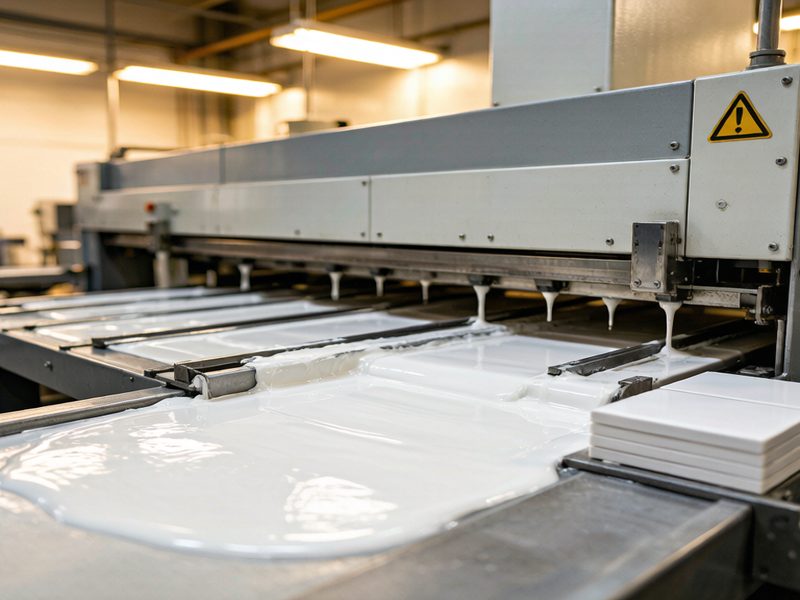
In ceramic production, few additives do more work than sodium silicate. It acts as both a deflocculant and a grinding aid, quietly shaping how efficiently the whole plant runs. This guide explains what it does and why it matters.
What Is Deflocculation in Ceramics?
Clay particles in water naturally attract each other and form clumps (flocs). Those clumps make a slurry thick and hard to pump. Deflocculation is the process of dispersing those clumps so the particles repel each other instead.
Sodium silicate does this by releasing sodium ions that neutralize the positive charge on clay particle edges. When every particle carries the same negative charge, they push apart — the slurry becomes fluid while containing far less water.
Why Ceramic Plants Want Deflocculated Slips
- Higher solids content: slips can reach 67–73% solids instead of ~60%.
- Lower drying energy: less water to evaporate in spray dryers.
- Better casting: faster mold release and stronger green bodies.
- Easier pumping and grinding: lower viscosity saves mill energy.
Typical Use in the Process
Sodium silicate is added during wet milling of the body and during glaze preparation. Dosage is usually small — often 0.1–0.5% of dry solids — and is tuned to the specific clay body. In glaze slips it keeps particles suspended and prevents settling.
Choosing the Right Grade
For ceramic deflocculation, medium-modulus liquid grades around 2.5–3.2 are the common starting point. Some plants combine sodium silicate with a small amount of sodium carbonate for finer rheology control. Always run a small batch test before committing to a dosage.
Common Mistakes to Avoid
- Over-deflocculating: too much silicate makes the slip stringy or "liver".
- Adding water to thin: this dilutes density; instead add deflocculant in small steps.
- Ignoring water quality: hard water changes the dose required.
FAQ
Is sodium silicate the only deflocculant?
No — sodium carbonate, sodium polyacrylates and other organic dispersants also work. Silicate is the traditional, low-cost choice.
Does it affect glaze color?
At normal dosages it has no visible effect; it burns out or stays inert during firing.