
 中文
中文
 Español
 Français
 Русский
 日本語
日本語
 한국어
한국어
 Tiếng Việt
 Bahasa Indonesia
 ภาษาไทย

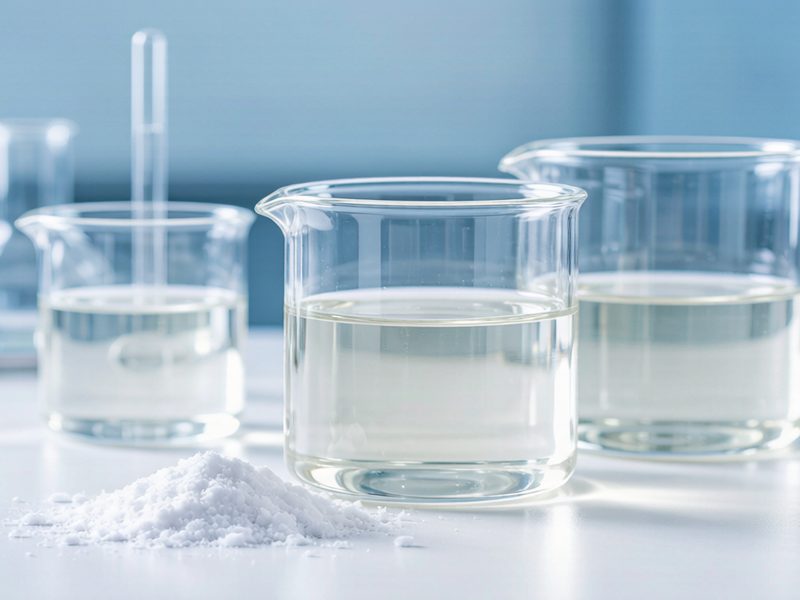
Sodium silicate — commonly called water glass or liquid glass — is an inorganic compound made of sodium oxide (Na₂O) and silicon dioxide (SiO₂). Its general formula is written as Na₂O·nSiO₂, where n represents the molar ratio between silica and soda. The compound is registered under CAS number 1344-09-8 and is one of the most widely produced silicate materials in the world.
What Does Water Glass Look Like?
Sodium silicate appears in two basic physical forms. The liquid form is a clear, slightly hazy, viscous alkaline solution that feels slippery to the touch. The solid form is a glassy lump produced directly from the furnace, which can then be crushed into granules or ground into a fast-dissolving powder.
Why Is It Called Water Glass?
The name "water glass" comes from its glass-like appearance when solidified and its ability to dissolve in water to form a thick, syrupy solution. Unlike ordinary glass, sodium silicate is water-soluble, which makes it enormously useful in manufacturing.
Key Properties
- Strongly alkaline: the aqueous solution typically has a pH between 11 and 13.
- Soluble in water: dissolves readily, especially the low-modulus grades.
- Non-flammable: poses no fire or explosion hazard on its own.
- Forms gels and films: can harden into silica-based structures that bind, seal or protect.
How Sodium Silicate Is Produced
The main manufacturing route is the high-temperature fusion of high-purity silica sand with soda ash (sodium carbonate) in a furnace at roughly 1300–1500°C. The molten glass is cooled into lumps or dissolved in water under pressure to make liquid grades. Both routes are covered in more detail in a separate guide.
Major Applications at a Glance
| Industry | Typical Role |
|---|---|
| Detergents | Builder, alkalinity buffer, anti-redeposition |
| Ceramics | Deflocculant, grinding aid for body and glaze |
| Foundry | Binder for sand molds and cores |
| Water treatment | Corrosion inhibitor, coagulant aid |
| Paper | Peroxide bleaching stabilizer |
| Construction | Concrete densifier, waterproofing, soil stabilization |
Is Sodium Silicate Safe?
When handled correctly with appropriate protective equipment, sodium silicate is safe to use in industrial settings. It is alkaline and can irritate skin and eyes on direct contact, so standard chemical handling practices — goggles, gloves and good ventilation — are essential. A full safety overview is available in our handling and storage guides.
FAQ
Is water glass the same as sodium silicate?
Yes. "Water glass" and "liquid glass" are common trade names for the same compound, sodium silicate.
Is sodium silicate harmful to the environment?
It is naturally derived and generally considered low-risk when properly diluted and disposed of according to local regulations.
Can sodium silicate be customized?
Yes. Modulus, concentration, physical form and packaging can all be tailored to a buyer's specification.