
 中文
中文
 Español
 Français
 Русский
 日本語
日本語
 한국어
한국어
 Tiếng Việt
 Bahasa Indonesia
 ภาษาไทย

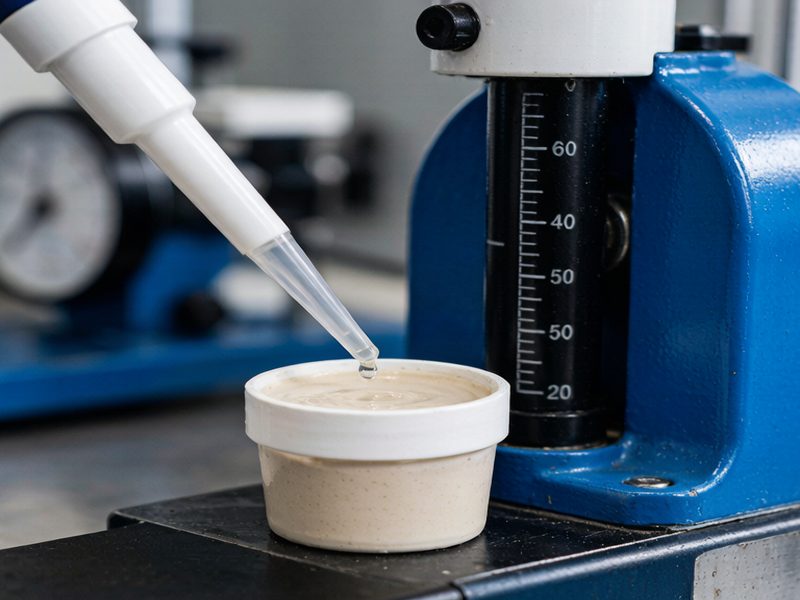
Getting the deflocculant dose right is the difference between a beautiful casting slip and a ruined batch. This guide walks through practical dosages, mixing steps and troubleshooting — written for plant technicians.
Starting Dosage Recommendations
Dosage is always expressed as a percentage of dry clay weight. A conservative starting point:
| Deflocculant | Starting Dose (of dry clay) |
|---|---|
| Sodium silicate (liquid) | 0.3 – 0.6% |
| Sodium carbonate (soda ash) | 0.1 – 0.3% |
| Combination (silicate + soda) | 0.3% + 0.1% |
| Organic dispersant (e.g. polyacrylate) | 0.2 – 0.4% |
Mixing Procedure That Works
- Weigh your water into the mixing vessel.
- Add the deflocculant to the water first and stir until fully dissolved.
- Add dry clay gradually while mixing — do not dump it all in.
- Mix until the slip pours in a steady, even stream.
- Strain through an 80-mesh sieve, ideally twice.
- Rest the slip for at least 24 hours before casting.
Signs of Over-Deflocculation
Too much deflocculant produces a slip that is stringy, gelatinous or glossy on the surface. Adding more water will not fix it. Instead:
- Add a little more dry clay to rebalance, or
- Add a small amount of a flocculant such as vinegar (acetic acid) or calcium chloride.
Water Quality Matters
Hard water contains calcium and magnesium that consume deflocculant. If your source water changes, recalibrate the dose. Many plants test and adjust per batch until the system stabilizes.
Working Safety
Sodium silicate is alkaline. Wear safety goggles, nitrile gloves and protective clothing, and work in a ventilated area. Wash skin immediately after contact.
FAQ
Why is my slip thickening after resting?
A slight increase in viscosity (thixotropy) is normal. If it thickens too much, add deflocculant in tiny increments.
Can I reuse recycled body scrap?
Yes, but recycled material changes the required dose — retest when scrap ratio changes.